Open Ticket
  +373 79 600002
  Telegram Live Chat
  F.A.Q
F.A.Q  English
 Русский
  Română
  Deutsch
  Français
  Türkçe
  Español
  Português
  Українська
  български
  Polski
  Indonesia
  中文 (中国)





































































































































 on All Hosting Services






How to Check a Server for Malware: What to Look For and Which Detection Approach Fits Your Setup
Why Checking a Server for Malware Matters More Than Most Users Realize
If a VPS suddenly feels slow, the first instinct is usually simple: run a scan. Maybe CPU usage spikes for no obvious reason. Maybe outbound traffic starts looking strange. Maybe a website gets flagged for spam or blacklisting. That instinct is not wrong. It is just incomplete. On a server, the real question is rarely only “what scanner should I use?” It is usually “what changed, and which layer would actually show me that change?”

That distinction matters because server malware is often less dramatic than people expect. It does not always announce itself like a desktop virus. Instead, it quietly turns into operational damage. It can hurt uptime. It can damage reputation and SEO. It can also create infrastructure-cost or hosting-abuse problems. A compromised web server can keep serving pages while something else happens in the background. It may send spam, mine cryptocurrency, recreate malicious files, or give an attacker a reliable path back in.
📝 Note: If you only remember one thing, remember this: a clean scan is not proof of a clean server.
Public-facing servers are attractive targets for exactly the reasons businesses and self-hosters like them. They are always on. They are reachable from the internet. And they often sit close to applications, credentials, uploads, customer traffic, and sensitive workflows. This guide is here to make that situation easier to reason about. By the end, you should know which detection layer to start with for your setup instead of just collecting scanner names. First, though, you need a very small vocabulary set so the rest of the framework clicks quickly.
Quick Keywords and the Mental Model You Need First

You do not need a security certification to follow the rest of this article. You only need a handful of terms that keep server malware detection from turning into jargon soup. Think of this section as the minimum map: enough language to recognize what you are looking at, without drowning in acronyms or enterprise vocabulary.
The following glossary keeps those terms practical:
| Keyword | Plain-English meaning |
|---|---|
| 🦠 Malware | Malicious software or code that does something you did not authorize, such as stealing access, changing files, sending spam, or abusing server resources. |
| 🚪 Web shell | A hidden script or file, often placed in a website directory, that gives an attacker remote command access through the web server. |
| ⛏️ Cryptominer | Malicious software that uses your server’s CPU or GPU to mine cryptocurrency for someone else. |
| 🔁 Persistence | The trick that lets an attacker or malicious file come back after reboot, cleanup, or user logout — like a hidden spare key they can keep using. |
| 🔎 Indicator of compromise | A sign that something may be wrong, such as a strange process, odd outbound traffic, suspicious file changes, or impossible login activity. |
| ⚠️ False positive | A legitimate file, alert, or behavior that gets flagged as suspicious even though it is not actually malicious. |
| 📏 Baseline | Your record of what “normal” looks like: expected files, services, traffic patterns, admin accounts, and scheduled tasks. |
One mental rule ties all of this together: checking for malware is not the same as proving a server is healthy. A baseline is like knowing what normal traffic in a building looks like. Logs are like CCTV plus door-access records. Persistence is the hidden spare key that keeps reopening the door after you think it is closed. Detection checks can raise or lower your confidence, but no single check proves total safety by itself. With that in place, it becomes much easier to see what server malware usually looks like in real hosting environments.
What Server Malware Usually Looks Like in Real Life
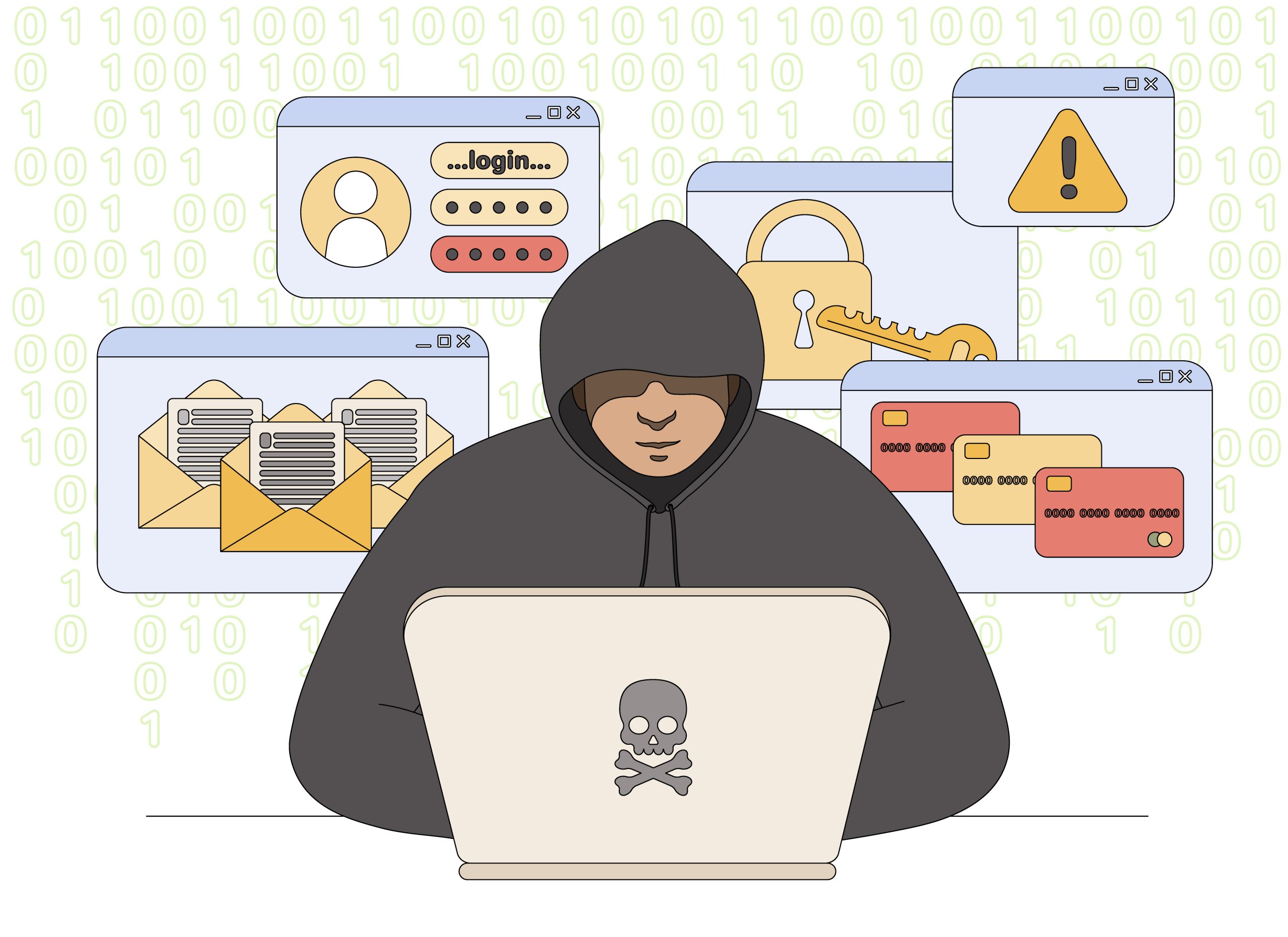
On an internet-facing Linux server, malware usually does not look like a user downloading one obviously bad file and getting pop-ups. It more often shows up in quieter ways.
- One server may get a web shell hidden inside website content.
- Another may start running a cryptominer that eats CPU.
- In other cases, the issue is a backdoor that allows return access or a persistence mechanism that survives cleanup attempts.
- In web-hosting environments, the signals are usually more operational than theatrical.
Suspicious changes in the web root, odd PHP files, unexpected shell access, and unusual scheduled jobs are much more realistic signs than anything resembling desktop antivirus theater.
Web shells are especially important because they often blend into ordinary web content. Sometimes they look like a small uploaded script. Sometimes they hide inside a modified theme file. In other cases, they appear as a renamed utility mixed in with legitimate application files. A backdoor is simply a hidden way back in. Persistence is how that access survives.
⚠️ Note: This article is about detection, not malware removal or incident response. The goal here is to help you recognize the right evidence layers, not to walk through cleanup steps.
On servers, that persistence often lives in places administrators do not review first. It may sit in recurring jobs such as `cron`. It may hide in startup services such as `systemd`. It can also appear in modified SSH keys or shell-launch paths that quietly restore a malicious file after someone deletes it. Ransomware can still happen, but in many Linux hosting scenarios it is a later-stage outcome, not the only threat worth thinking about.

The entry paths are usually ordinary weaknesses, not movie-style zero-day scenes. Most of them are familiar. An outdated CMS or plugin can do it. So can an exposed admin panel, weak SSH hygiene, a vulnerable custom web app, an unsafe file-upload path, or control-panel abuse. In shared or control-panel environments, account-level compromise can still be serious even without full root access. An attacker may only need access to web content, scheduled tasks, or one hosting account’s shell path to establish a durable foothold.
Current guidance from CISA, NSA, and recent Microsoft Linux-hosting research keeps pointing to the same kinds of tradecraft.
- One example is a web-facing process such as `php-fpm`, `apache2`, or `nginx` spawning shell commands.
- Another is an obfuscated PHP file rebuilt through a `base64` decode pattern.
- Another is a cron job that quietly recreates a malicious file after it disappears.
That is what real-life server compromise often looks like. Unexplained CPU load can point toward mining. Reappearing files can point toward persistence. Strange changes in internet-facing directories can point toward a web shell. And none of that requires a flashy “virus found” banner to be dangerous.
Why a Single Clean Scan Does Not Prove a Clean Server
Signature-based scanning means checking files and artifacts against known malicious patterns, hashes, or rules — in plain English, a watchlist. That is still useful. If you want a fast first-pass check for known bad files, a signature scan absolutely has value. It can catch familiar malware. It can also flag suspicious web content or low-effort commodity threats. In many cases, it is the easiest low-friction starting point when you need to scan a VPS for malware quickly.

The problem is what signature scanning cannot see well on its own. Obfuscated web shells may not match cleanly. Modified legitimate-looking files may not look obviously malicious. Attackers can also “live off the land,” meaning they abuse built-in tools already on the server instead of dropping one big suspicious binary. Sometimes the real clue is not a clearly labeled malicious file at all. It may be persistence hidden in startup points, scheduled jobs, or authorized keys. Or it may be contextual behavior, such as unusual timestamps in web roots, unexpected outbound connections, a web server process spawning shell commands, or a strange file type suddenly generating web requests.
📝 Note: Clean scan ≠ clean server.
That is why scan results have to be read beside other evidence layers. A clean result matters, but it only answers one question: did this layer recognize something known or obviously suspicious? To judge the broader state of the server, you also need to look at file changes, logs, process ancestry, and outbound activity. The right mental shift is small but important: do not ask one tool to prove innocence. Ask each layer what kind of abnormality it is good at revealing.
The Five Detection Layers That Actually Matter

Good server malware detection works best when you stop thinking in tools and start thinking in observation layers. For most Linux server and hosted web workloads, the useful checks fall into five groups.
- There are quick scans for known bad content.
- There is behavioral monitoring for suspicious runtime activity.
- There is file integrity or known-good comparison for unexpected changes.
- And there are two review layers: logs and traffic, plus persistence and startup points.
Each one sees a different kind of abnormality. Each one also has blind spots. The goal is not to pile on random security products. The goal is to cover the evidence types most relevant to the server you actually run.
The table below compares those five layers side by side:
| Detection layer | What it catches well | What it may miss | Best fit | Analogy |
|---|---|---|---|---|
| 🔍 Signature / on-demand scan | Known malicious files, common web malware, quick first-pass checks | Obfuscated scripts, built-in tools used maliciously, subtle persistence, context-heavy behavior | Single VPS checks, low-friction first reviews, confirming known-file suspicion | Checking visitors against a watchlist |
| 👣 Behavioral monitoring | Suspicious runtime activity, odd parent-child process chains, web-server processes spawning shells, miner-like resource abuse | Quiet dormant files, limited context if telemetry is thin, changes that happened before monitoring existed | Production servers, app servers, high-exposure workloads | Noticing suspicious movement inside the building |
| 📦 File integrity / known-good comparison | Unexpected changes in web roots, application files, scripts, and content that should rarely change | Legitimate but undocumented changes, attacks living mostly in memory or logs, weak comparisons without a baseline | CMS sites, hosted web apps, public web workloads | Comparing today’s inventory to yesterday’s trusted record |
| 📹 Log and traffic review | Suspicious requests, odd outbound connections, auth anomalies, spam/blacklist clues, unusual access patterns | File-only compromise with little retained logging, incomplete logs, changes that never reached your log source | App servers, web servers, business workloads, any public-facing system | CCTV footage plus door-access records |
| 🗝️ Persistence / startup review | Cron abuse, modified startup services, planted SSH keys, self-healing malware that returns after deletion | One-time malicious files with no persistence, weak visibility into prior changes | Cleanup verification, repeat incidents, shared/control-panel environments, long-lived servers | Finding the hidden spare key |
Signature scans and file comparison often work well together because they answer two different questions. The scan asks, “Do I recognize anything known-bad here?” File integrity asks, “Did something change where it should not have changed?” That second question deserves extra weight on web workloads. This is especially true for CMS sites, customer portals, and public web apps. If the web root suddenly contains modified files, unexpected scripts, or code that keeps reappearing, known-good comparison is often one of the highest-signal ways to detect a compromise early.

Behavioral monitoring and log review are crucial when attackers try to blend in, since unusual activity often reveals compromises before obvious malware does—like server processes spawning shells, outbound traffic heading to unfamiliar destinations, or critical applications behaving oddly. Modern Linux breaches often rely on legitimate tools, accounts, or software paths used suspiciously, making persistence checks equally important: attackers may hide in startup paths, cron jobs, service definitions, or added SSH keys to maintain access even after visible artifacts are removed.
📝 Important: Effective defense isn’t about piling on random tools but ensuring layered coverage across evidence paths—bad content, runtime behavior, unexpected file changes, suspicious requests, and persistence mechanisms.
The quickest way to apply that framework is to map the symptom to the first layer most likely to explain it:
| Symptom | First layer to consult | Why |
|---|---|---|
| ⚙️ Sudden CPU spike | Behavioral monitoring | Miners and abuse scripts often reveal themselves through suspicious process activity and resource patterns. |
| 📧 Blacklisting, spam, or abuse complaints | Log and traffic review | Outbound connections, mail activity, and request history usually explain this faster than a file-only check. |
| 📁 Modified web files | File integrity / known-good comparison | Unexpected changes in web content are often the clearest signal on CMS and web-hosting workloads. |
| 🐚 Web server spawning shell commands | Behavioral monitoring | This is a strong runtime indicator of web-shell-style activity or command execution abuse. |
| 🔁 Suspicious file reappears after cleanup | Persistence / startup review | The file is often being recreated by a cron job, service, key, or another hidden re-entry path. |
Once that mapping feels natural, the next question becomes much easier: which layer should you start with on your own type of server?
Where to Start Based on Your Server Setup

Start with the layer most likely to reveal abnormality fastest for your setup, not the fanciest security category. A single VPS, a WordPress-style web server, and a business-critical production stack do not expose the same signals first, so they should not all start from the same detection layer.
| Setup | Recommended first layer | Optional second layer | Why |
|---|---|---|---|
| 🖥️ Single VPS | Signature / on-demand scan | Auth/system log review | A quick scan is often the lowest-friction first pass, then logs help explain how or when something changed. |
| 🌐 CMS / WordPress-style web server | File integrity / known-good comparison | Access-log review or signature scan | Public web content changes are high-signal here, especially when core files and themes should be predictable. |
| 🗄️ App server with database | Log and traffic review | Behavioral monitoring | Multi-service workloads often expose trouble through request flow, auth behavior, or unexpected network movement first. |
| 🏭 Business-critical production workload | Behavioral monitoring | Centralized log review | When downtime, customer impact, or revenue risk is high, runtime visibility and retained logs become much more valuable. |
| 🧩 Control-panel / shared-hosting environment | File comparison in web content | Persistence / scheduled-task review | Compromise may live at the account level inside web files or recurring jobs even without full server ownership. |
That “optional second layer” becomes much less optional as exposure, revenue impact, or repeat-compromise risk goes up. If a low-stakes test VPS gets a quick first-pass scan, that may be enough to begin triage. If the server handles customer traffic, payments, internal business logic, or repeated abuse events, the second layer is usually part of the minimum sensible view, not a nice-to-have.
This is also where provider context matters in a useful way. If you run a VPS or dedicated server with a host like AlexHost, the important question is still not “which branded security thing should I buy first?” It is “what is exposed on this workload, and which layer shows abnormality fastest?” Public web apps benefit from file comparison and log review. Broad Linux VPS workloads often benefit from a quick scan plus auth and system log checks. Snapshots and backups help recovery, but they also make trusted-state comparison easier when you need to understand what changed.
Best Practices That Make Malware Easier to Spot Early
Detection becomes dramatically easier when “normal” is already documented. In practical server terms, a baseline can be simple:
- Know which files belong in the web root.
- Know which services should be exposed.
- Know which admin accounts and cron jobs are expected.
- Know which outbound destinations are normal, along with the rough CPU, RAM, and traffic patterns you usually see.
Without that baseline, every investigation starts with a harder question than it needs to: is this actually suspicious, or is it just unfamiliar?

💡 Tip: Baselines only help if you capture them before trouble starts.
Logs are essential for visibility, not a luxury, and even off-box retention is far better than relying only on what survives on the server; paired with backups or snapshots, which preserve known-good states for recovery and comparison, they create a reinforcing triad where logging shows what happened, baselines show what was normal, and backups provide a reference point.
Alongside this, everyday hardening habits—patching public-facing apps and plugins, tightening admin access controls, and regularly reviewing scheduled tasks and key persistence points—make anomalies clearer and persistence harder to hide. The goal isn’t perfection but visibility hygiene: small, consistent practices that make detecting and investigating compromises faster, sharper, and less guess-based.
Common Mistakes That Lead to False Confidence

The most common detection mistake is false immunity: the idea that Linux servers do not really get malware. They do. The form is just different from what many readers learned from desktop security conversations. On servers, compromise more often shows up as hidden web changes, abuse of resources, or outbound activity that should not be there. If the system is public-facing, useful, and insufficiently watched, it is still a target.
The second mistake is false replacement: assuming one useful control can answer a question that really needs multiple kinds of evidence. Firewalls, hardened login paths, and malware scans all matter, but they are not interchangeable. A firewall controls traffic boundaries. Access controls reduce who can get in. A scan checks for known malicious content. None of them, by itself, tells you the full story of suspicious runtime behavior, modified web files, or unauthorized outbound activity.
⚠️ Warning: Deleting one suspicious file does not prove the compromise is gone.
That leads to the third mistake: false closure. A file disappears, so the problem is assumed finished. Then it comes back because the cron job, startup entry, or attacker access path was never removed. Or the original entry point is still open, so the compromise simply returns through the same door. The practical lesson is not “panic.” It is “do not stop at the first visible artifact.” Keep an eye on outbound traffic, persistence points, and the path that made the compromise possible in the first place. That brings us to the article’s simplest reusable rule.
Think in Layers, Not in One Tool

When something feels off on a server, the best first question is not “what scanner is best?” It is “what changed, and which layer would show that on this kind of workload?” Sometimes that first look belongs in a quick on-demand scan. On a web workload, it may belong in file comparison. On another server, access logs or a persistence review may tell you more. The useful habit is to match the symptom and the server type to the evidence layer most likely to reveal the abnormality fastest.
The practical rule to keep is simple: start where this workload is most likely to reveal change, then widen the view only as risk, exposure, or business importance justifies it. For VPS, dedicated, and hosted web workloads — including the kinds of infrastructure many AlexHost customers run — clarity about exposure and observation points matters more than buying random security tools. The better your view of files, behavior, logs, and persistence, the sooner “something feels off” turns into “now I know where to look.”