Open Ticket
  +373 79 600002
  Telegram Live Chat
  F.A.Q
F.A.Q  English
 Русский
  Română
  Deutsch
  Français
  Türkçe
  Español
  Português
  Українська
  български
  Polski
  Indonesia
  中文 (中国)






































































































































 on All Hosting Services









Bun vs Node.js: Speed, Compatibility, and What Actually Matters
Keywords: Quick Reference Before We Start
Before getting into the comparison, here are the core terms that appear throughout the article.
| Keyword | Quick definition |
|---|---|
| ⚙️ Runtime | The environment that runs JavaScript outside the browser and gives code access to files, networking, processes, and system APIs. |
| 🧠 JavaScript engine | The part that actually executes JavaScript code. In this comparison, V8 powers Node.js and JavaScriptCore powers Bun. |
| 🟢 Node.js | The long-established server-side JavaScript runtime and the default reference point for most npm packages and frameworks. |
| ⚡ Bun | A newer JavaScript runtime that also includes built-in tooling such as a package manager, test runner, and bundler. |
| 📦 Package manager | The tool that installs and manages dependencies, such as npm in Node workflows or Bun’s built-in installer. |
| 🧪 Test runner | The tool used to execute automated tests, such as node:test or bun test. |
| 🧾 TypeScript | JavaScript with type annotations and extra developer tooling. Both Node and Bun now support parts of this workflow directly. |
| 🔌 Node-API | The interface native add-ons use to work with Node-compatible runtimes. It matters when your project depends on native modules. |
| 🔁 Compatibility | How closely a runtime matches Node’s behavior, APIs, and package expectations in real projects. |
| 📊 Benchmark | A controlled performance test that can reveal tendencies, but not the whole story of a production application. |
| 🏗️ Greenfield project | A new project without legacy constraints, which usually gives you more freedom to choose a newer runtime. |
| 🚚 Migration risk | The practical risk of moving an existing application from one runtime to another and discovering unexpected breakage. |
Why Bun vs Node.js Is a Real Decision Now
You are starting a new JavaScript project. Maybe your instinct is to reach for Node because that has been the default for years. Then you notice Bun is no longer showing up as a novelty in developer conversations. It is showing up as a real option. That changes the question from “Should I experiment with Bun?” to “Should this project run on Node or Bun from day one?”
So this article stays narrow on purpose. It is not a Deno roundup, and it is not a disguised npm vs bun install post. It is a practical Bun vs Node.js comparison focused on the things that actually change your day-to-day experience: speed, tooling, compatibility, and production fit.
What Node.js and Bun Actually Are
Before comparing them, it helps to get the category right. A JavaScript engine is the motor. It executes JavaScript. A runtime is the full vehicle around that motor — the part that gives your code access to files, networking, processes, modules, and the rest of the environment it needs to do real work. The bundled tools are what come in the trunk.
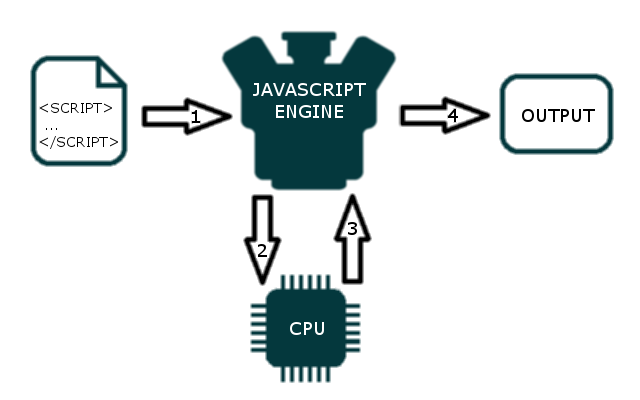
Bun is a newer runtime built in Zig on top of JavaScriptCore. Its pitch is broader by design: runtime, package manager, test runner, and bundler in one package. That is why Bun often feels “bigger” in comparisons. It is still a JavaScript runtime, but it ships with more first-party defaults around it.
Bun’s own docs describe it as a drop-in replacement for Node.js, and that explains a lot about its adoption strategy. But “drop-in replacement” is a goal and a direction, not the same thing as perfect compatibility in every stack. That distinction matters more as your project gets more complex.
Where Node and Bun Overlap More Than People Think

The gap between Node and Bun is smaller than many older comparison posts make it sound. Both can run server-side JavaScript. Both can run TypeScript in modern workflows. Both live close to the npm ecosystem in practice, which means the average developer is not choosing between two alien worlds.
That is especially true now that Node has closed some of the gaps older Bun-vs-Node articles still repeat. Current Node versions can run TypeScript files natively when the code uses erasable syntax — meaning type annotations and other syntax that can be stripped away without changing runtime behavior. Node’s built-in test runner is also stable and far more capable than its earlier reputation suggests.
That freshness matters because it resets the comparison. Bun is not the only runtime with a modern developer experience story anymore, and Node is not the stripped-down baseline it is sometimes portrayed to be. The real choice is about trade-offs: Bun still feels more integrated, while Node still feels more universal. With that overlap established, the first major question is the one readers usually ask first anyway: performance.
Performance: Where Bun Is Faster, and Why That Still Doesn’t Settle the Debate

That matters because developers feel performance long before they measure it formally. Faster installs make a project feel lighter. Faster startup makes local scripts and dev servers feel snappier. Faster simple-runtime execution can also make Bun attractive for small APIs, command-line tools, and other workloads where overhead shows up immediately.
📝 Note: Benchmarks are directional, not verdicts. They are useful for spotting tendencies, but they usually isolate one layer of the stack. Real applications add frameworks, I/O, database calls, dependency trees, caching, and deployment conditions that can completely change the result.
That last point is where benchmark-driven conclusions usually break down. A runtime can dominate synthetic tests and still lose inside a framework-heavy production setup. A concrete example: Platformatic’s January 2026 Next.js benchmark on AWS EKS reported Node averaging about 16.44ms while Bun averaged about 233.76ms in that specific configuration. The lesson is not that Node is “really faster.” The lesson is that workload shape matters more than headline charts.
So the better question is not “Which runtime is faster?” It is “Which runtime is faster for what I am actually running?” If your work is dominated by installs, startup time, small scripts, or simple services, Bun’s edge is meaningful. If your application lives inside a heavier framework or a mature production stack, you need to measure the stack itself — not assume the benchmark table already made the decision for you.
Developer Experience and Built-In Tooling

TypeScript is the clearest example. Bun runs TypeScript out of the box with very little ceremony. Node has also improved a lot here: in current versions, node app.ts works for erasable TypeScript syntax without extra flags. That is a real upgrade, but it is not the same thing as replacing every TypeScript build setup. If your project relies on transform-only features or a framework-specific compilation pipeline, you will still need more than the runtime alone.
The testing story follows the same pattern. Node’s node:test runner is stable and now includes features such as mocking, snapshots, coverage reporting, and watch mode. Bun’s bun test is built in and cohesive with the rest of its toolchain. The command-level difference looks small, but it captures the broader workflow feel:
# Run a TypeScript entry file
 node app.ts
 bun app.ts
# Run built-in tests
node --test
bun test
# Install dependenciesThat compact block is the whole vibe difference in miniature. Bun keeps the path short: install, run, test, bundle, move on. Node can now do more on its own than older comparisons admit, but it still assumes a world where teams may want separate tools for separate jobs. That modularity is not a weakness if your team already trusts its existing workflow.
npm install
bun install
The same applies to bundling — packaging source files into deployable output. Bun includes bundling in the default experience. Node does not treat bundling as a built-in center of gravity, which makes sense for teams that already use established build tools or manage multiple packages through npm workspaces. So Bun’s real DX advantage is not just a longer checklist of features. It is the fact that the defaults are integrated.
Compatibility and Ecosystem Maturity

This is the part of the article where Node earns its reputation. Node is still the reference platform for the broader npm ecosystem. In plain English, that means packages, frameworks, and edge-case behavior are usually built and tested against Node first. That does not make Bun second-rate. It just means Node remains the safest baseline when compatibility risk matters.
Bun has improved dramatically, and it is important to say that plainly. Its current compatibility page tracks Bun against Node.js v23, and many built-in Node modules are fully implemented. That is why Bun can run a large amount of real Node-oriented software today instead of living in “interesting demo” territory.
But Bun’s own documentation also makes the remaining gaps visible. At the time of writing, node:test is only partly implemented, while modules such as node:repl, node:sqlite, and node:trace_events are listed as unimplemented. That is the difference between “most things work” and “everything important for my stack works.”
⚠️ Warning: The last 5% can be the whole project. A migration can look safe right up until one native module, one framework edge case, or one Node-specific behavior turns out to be load-bearing. For production apps, that final compatibility gap matters more than the first 95%.
There is also the native add-on question. Node-API is the interface native modules use to talk to the runtime, and Bun says its implementation is about 95% complete. That is strong enough that many native add-ons work today. It is not strong enough to treat every dependency-heavy stack as risk-free. If your app relies on older packages, native modules, or framework behavior that assumes Node as the underlying reference platform, one unsupported edge can block the whole migration.
Production, Hosting, and Migration Reality

That is why Bun looks strongest in contained scenarios: internal tools, CLIs, simple APIs, side services, and fresh applications where the team wants fast iteration and does not inherit years of assumptions. Node looks strongest when the application is framework-heavy, dependency-sensitive, or already stable in production and therefore expensive to surprise.
The operational effects are practical, not philosophical. Runtime choice changes what your team expects from logs, debugging, restart behavior, test execution, CI timing, and long-running service stability. If you are deploying on an AlexHost VPS — or really any VPS where predictability matters — familiar runtime behavior and broad ecosystem knowledge can matter just as much as shaving time off a benchmark.
That is also why migration risk should be treated as real work, not a cosmetic switch. If a Node app is already healthy in production, moving it to Bun only makes sense when the upside is specific and measurable. Otherwise, you are trading known behavior for investigation time, rollback uncertainty, and a new class of “works locally, acts differently in prod” problems. With that reality in view, the table below works best as a recap — not a shortcut.
Bun vs Node.js at a Glance
The following table summarizes the major decision axes after all of the context above. Read it as a recap of trade-offs, not as a scoreboard.
| Category | Bun | Node.js |
|---|---|---|
| 📜Maturity | Fast-moving and increasingly serious, but still younger | Long-established default with the deepest operational history |
| ⚡Speed tendency | Often strongest for startup, installs, small scripts, and simple runtime benchmarks | Often “fast enough,” and sometimes better in framework-heavy real-world workloads |
| 📝TypeScript workflow | Out-of-the-box and low-friction | Native support now exists for erasable syntax, but broader TS workflows may still need extra tooling |
| 📦Package management | bun install is integrated into the same toolchain | npm remains the most battle-tested default and fits existing workflows well |
| 🧪Built-in testing | bun test is convenient and cohesive | node:test is stable and much more capable than older comparisons imply |
| 🛠️Bundling | Built in by default | Usually handled with separate tools when needed |
| 🔗Compatibility | Strong and improving, but not universal parity | Safest compatibility baseline for npm packages and frameworks |
| ⚠️Migration risk | Best when the app is contained and the blast radius is low | Strongest default when production predictability matters most |
| 🎯Best-fit projects | New, flexible projects where integrated speed and reduced setup friction matter | Existing production systems, dependency-heavy apps, and teams that prioritize confidence |
No single row decides the whole comparison. The right answer comes from how those rows combine inside your actual project, team habits, and deployment environment.
Which One Should You Choose?

Choose Node when compatibility and operational confidence matter more than novelty. That usually means existing production codebases, framework-heavy applications, older dependency trees, teams with established CI and debugging patterns, or any workload where broad ecosystem safety beats integrated convenience. Node is still the safer default when the cost of surprises is high.
💡 Tip: Pilot Bun where the blast radius is low. A side project, internal tool, CLI, or contained service is the right place to learn where Bun helps your workflow and where your stack still leans on Node assumptions.
The middle ground is the practical one: you can be curious about Bun without making Bun your default for every production workload. In fact, that is probably the healthiest way to approach it. Let Bun earn trust in places where a compatibility surprise is annoying, not catastrophic.
If you want the shortest possible recommendation, here it is: default to Node when you need maximum compatibility confidence, and reach for Bun when you want a faster, more integrated workflow on a project that can absorb some ecosystem uncertainty. That is not fence-sitting. It is the real decision framework.
Bun Isn’t Just Hype, and Node Isn’t Just the Old Default
If you go back to that new-project moment from the opening, the choice looks cleaner now. Bun is not just a toy benchmark machine. It is a serious runtime with real speed wins and a genuinely smoother all-in-one developer experience. Node is not just the old safe pick either. It has evolved, added native TypeScript support for the right cases, matured its built-in test runner, and remains the most dependable compatibility baseline in the ecosystem.

What to Try Next
The safest next step is to test the runtime against the shape of work you actually do — not the shape of a benchmark somebody else published.
- If you are intrigued by Bun, run Bun on a side project, local script, or contained service first.
- If you are leaning Node, review current Node TypeScript support and node:test before assuming extra tooling is mandatory.
- If you are deploying on a VPS — whether that is AlexHost or another provider — validate install, startup, restart, and logging behavior on staging before changing the runtime in production.
Conclusion
Bun vs Node.js is not really a story about one runtime replacing the other. It is a story about choosing the right level of speed, integration, compatibility, and operational confidence for the project in front of you. Bun has earned serious attention because its performance is often impressive and its all-in-one workflow removes a lot of setup friction. Node keeps its position because ecosystem trust, compatibility depth, and production predictability still matter enormously.
That is why the strongest takeaway from this comparison is also the simplest one: choose based on project shape, not runtime hype. For greenfield work, internal tools, and low-risk services, Bun can be a smart and efficient choice. For established production systems, framework-heavy stacks, and dependency-sensitive applications, Node is still the safer default more often than not.
And if you are evaluating that choice in a real hosting environment, test it where it will actually live. On an AlexHost VPS, for example, the practical question is not just whether the app starts, but how the runtime behaves under install, restart, logging, and deployment conditions you can trust. That kind of validation will tell you more than another headline benchmark ever will.