Open Ticket
  +373 79 600002
  Telegram Live Chat
  F.A.Q
F.A.Q  English
 Русский
  Română
  Deutsch
  Français
  Türkçe
  Español
  Português
  Українська
  български
  Polski
  Indonesia
  中文 (中国)

























































































































 on All Hosting Services






Network Ports Explained: IP, Protocols, and Service Endpoints Made Simple
Why Network Ports Matter
If you have ever seen 22, 80, 443, or 3306 in documentation or a VPS firewall panel, you have already run into network ports. The usual frustration comes a few minutes later: the app works on localhost, the server is online, and yet nobody outside can reach it. That is the moment port numbers stop looking like background trivia and start feeling important.
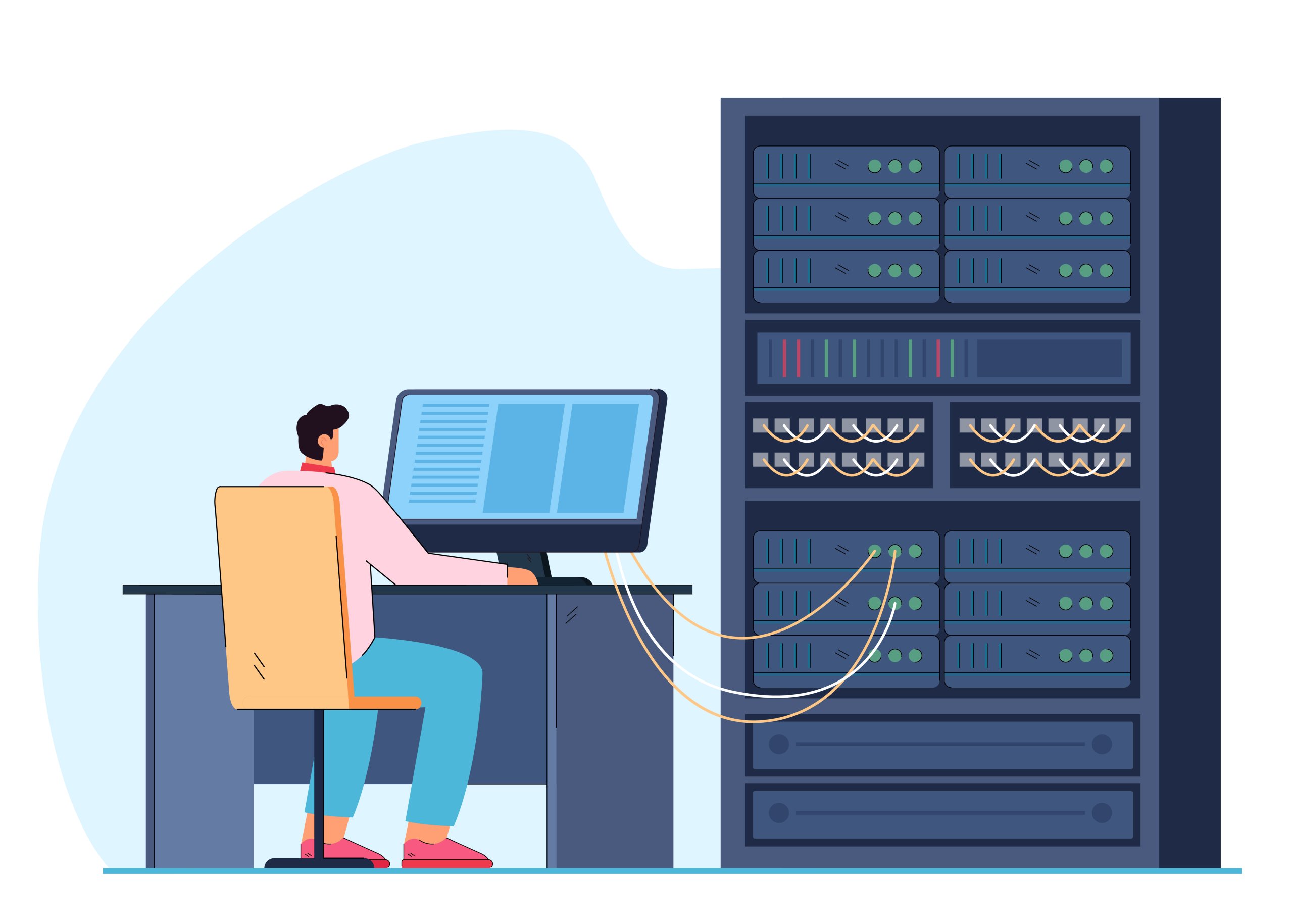
They matter because they sit behind very ordinary tasks. A website needs the right public ports to load. SSH needs the right port to let you manage a server remotely. A database may need to talk to an application, but not to the whole internet. That makes ports relevant to developers, self-hosters, hosting buyers, and technical teams — not just network engineers.
This guide is here to make the topic click without turning it into a networking certification course. The core promise is simple: IP finds the machine; the port finds the service. Once that model is clear, the numbers stop feeling random, and hosting decisions become much easier to reason about.
Quick Keywords Before We Start

You do not need much vocabulary to follow the rest of this article. A small glossary is enough to keep the explanation fast and plain-English instead of drifting into acronym soup.
| Term | Plain-English meaning | Why it matters here |
|---|---|---|
| 🌐 IP address | The network address of a machine on an IP network. | It tells traffic which machine to find first. |
| 📜 Protocol | The rules used for a kind of network conversation. | A port number only makes sense inside a protocol context. |
| 🔗 TCP | A transport protocol built around reliable, ordered connections. | Common services like HTTPS, SSH, and mail often use it. |
| 📡 UDP | A lighter transport protocol that does not use the same connection style as TCP. | Some traffic, such as many DNS lookups, often uses it. |
| 🔥🧱 Firewall | A traffic-control layer that allows or blocks specific network paths. | It affects whether a port is actually reachable. |
| 👂 Listening | A service is waiting on a specific port for matching traffic. | If nothing is listening, the port does not lead to a useful service. |
| 🚪 Open / closed | Labels for whether a service appears reachable or not from a given network path. | They describe reachability, not whether traffic is safe. |
That last line matters more than it may look. In this article, words like open, closed, and later filtered are about whether a network path works. They are not trust labels, and they do not tell you by themselves whether the traffic on that port is legitimate.
What a Network Port Actually Is
A network port is a logical, numbered endpoint that the operating system uses to direct traffic to the correct service on a machine. It is software-based, not something you can touch. When people say a web server is on port 443 or SSH is on port 22, they mean those services are waiting at those numbered endpoints for matching traffic.

💡 Tip: The easiest way to picture it is with one consistent analogy: an IP address is the street address of a building, and a port is the apartment number inside that building.
Getting the building right is not enough if you still do not know which apartment the delivery belongs to. In the same way, reaching the correct machine is not enough if the operating system still needs to know which service should handle the request.
That is why one machine can run many services at the same time without everything blending together. The same server might have a web server listening on 443, an SSH service listening on 22, and a database service listening on 5432 or 3306. The IP address brings traffic to the machine; the port keeps those services separated once it arrives.
This is also where a very common confusion gets fixed: a network port is not a physical connector like USB, HDMI, or the Ethernet socket on a device. Those are hardware interfaces. A network port is a logical service endpoint used by the operating system to sort traffic once it reaches the machine.
How a Real Connection Uses Source and Destination Ports
The static definition becomes much easier to understand once you watch a real connection happen. Imagine a browser opening an HTTPS website. The browser already knows the destination machine from DNS and IP routing, and it expects HTTPS on destination port 443. That destination port is the service-side clue telling the server, “this request belongs to the web service.”

But the server side is only half of the story. The client also uses a port: a temporary source port, usually a high-numbered one chosen automatically by the operating system. That lets your machine track its side of the conversation without you choosing the number manually.
Client browser
198.51.100.24:53144  ───── HTTPS request ─────▶  203.0.113.10:443
(temporary source port)                         (destination port)

203.0.113.10:443     ───── HTTPS response ────▶  198.51.100.24:53144
(web service listening)                        (same temporary client port)
When people say a service is listening on a port, this is what they mean: the service is waiting at that numbered endpoint for traffic meant for it. If the server receives traffic for 203.0.113.10:443, the operating system hands it to the HTTPS service listening there. If nothing is listening on that destination port, the traffic does not reach a working service even if the machine itself is online.
At a high level, this is the clean split to remember: IP identifies the machine, and TCP or UDP carries the port numbers that identify the service endpoint. That is why ports are considered a transport-layer concept rather than an IP concept. It also explains why the same port number can exist under different protocols and still mean different conversations.
📝 Note: The same number can exist under different transport protocols, so protocol still matters. 53/UDP is common for ordinary DNS lookups, while 53/TCP is also used in DNS for cases such as larger responses or zone-related operations.
The practical takeaway is that ports are not only a server-side concept. Servers use destination ports so clients can find services, but client devices use temporary source ports too. That is why high-numbered ephemeral ports appear so often in real connections.
Port Ranges and the Common Numbers Worth Recognizing
Once the mechanics are clear, the numbering system starts to look organized instead of arbitrary. Broadly speaking, ports are grouped into three ranges:
- Well-Known/System ports (0–1023)
- Registered/User ports (1024–49151)
- Dynamic/Private ports (49152–65535)
You do not need to memorize the ranges exactly, but it helps to know that low numbers are often established service identities while the highest range is commonly used for temporary client-side traffic.
That last range is especially useful to understand because it clears up a beginner misconception. Dynamic or private ports are often the temporary source ports your browser, mail client, or other application uses when connecting out to a stable service port like 443. In other words, high-numbered ports are frequently part of the client side of a conversation, not public identities you are expected to remember.
The goal, then, is recognition rather than memorization. These are the port numbers most readers actually benefit from recognizing in documentation, dashboards, reverse proxies, and hosting panels:
| Port | Protocol | Typical service | Where readers actually see it |
|---|---|---|---|
| 22 | TCP | SSH | Remote admin access to a VPS, cloud instance, or dedicated server |
| 53 | TCP / UDP | DNS | Domain resolution, DNS servers, and resolver traffic |
| 80 | TCP | HTTP | Public websites, redirects, and web server defaults |
| 443 | TCP | HTTPS | Secure websites, APIs, dashboards, and reverse proxies |
| 25 | TCP | SMTP | Server-to-server mail delivery |
| 587 | TCP | Mail submission | Mail clients or apps sending through an authenticated mail service |
| 3306 / 5432 | TCP | MySQL / PostgreSQL | Application-to-database traffic in hosting or self-hosted stacks |
| 3389 | TCP | RDP | Remote desktop access to Windows systems |
You do not need to memorize this table to become effective. You only need enough recognition to ask good questions when you see a number. One caution before moving on: a common or registered port tells you what traffic is expected there, not whether that traffic is trustworthy.
Where Ports Show Up in Hosting, Cloud, and Self-Hosting

This is where the concept becomes operational. In real infrastructure, ports are not just labels attached to services. They are decisions about what should be publicly reachable, what should stay private, and what should not be reachable at all. Websites are usually public. SSH is usually restricted. Databases usually serve the application, not the whole internet.
If you are running a VPS on AlexHost — or really on any provider — a common setup looks like this.
- Ports 80 and 443 are open to the public because the site needs visitors.
- SSH on 22 is limited to trusted admin IPs or another controlled path.
- Database traffic stays internal-only.
The goal is simple: each service should have the reachability it actually needs, and no more.
Reverse proxies make this especially easy to see. From the public side, users connect to 80 or 443. Behind that front door, the reverse proxy may pass traffic to an internal application running on 3000 or 8080. That internal app port still matters, but it is part of the private path inside your architecture, not something the whole internet should usually reach directly.
Public internet
   │
   ├── 80 / 443 ──▶ Reverse proxy or web server ──▶ internal app on 3000 / 8080
   │
   ├── 22 ───────▶ SSH reachable only from trusted admin IPs or VPN
   │
└── 3306 / 5432 ──X not public; reachable only from the app/server network| Scenario | Public port(s) | Keep private | Why |
|---|---|---|---|
| 🌐💻 Public website on one VPS | 80, 443 | 3306 / 5432, unused admin ports | Visitors need the site; databases usually do not need direct public reachability |
| 🔑🖥️ Website with SSH administration | 80, 443 | Broad public access to 22 | Web traffic is public, but admin access should stay narrow |
| 🔄🛡️ Reverse-proxy setup | 80, 443 on the proxy | Internal app port like 3000 or 8080 | One clean public entrance is easier to secure and route |
| 📱🗄️ App with separate database | App-facing web/API port | Database port from the public internet | The database should usually answer only the application layer |
| 🏠📡 Home self-hosted service with port forwarding | Only the service you intentionally expose | Router admin, internal-only services, extra test ports | Forwarding should create one deliberate path, not a broad opening |
This is why ports keep showing up in VPS firewalls and cloud security groups: those layers decide what can reach a server. You also see them in hosting control panels, reverse proxies, and router port-forwarding screens because each of those tools helps define how traffic is exposed. They are all answering the same question: who should be able to reach which service from where?
💡 Tip: Moving a service off its default port can reduce casual noise or low-effort probing, but it is not a complete security strategy. Real protection still comes from narrow exposure, strong authentication, patching, and sensible access control.
Once you see ports this way, the subject becomes much more useful. You start reading port numbers as an exposure map for your infrastructure, not just as labels in a settings page. That shift is what makes firewall rules, reverse proxies, and private-vs-public service design much easier to understand.
Open, Closed, and Filtered: Why Reachability Changes
One reason ports feel confusing is that people often talk about them as if they have one fixed global state. In practice, words like open, closed, and filtered describe how a service looks from a particular network path. They tell you about reachability from an observer’s point of view, not an eternal truth about the machine.
| State | Plain-English meaning |
|---|---|
| ✅ Open | The service appears reachable on that path and is responding on that port. |
| ❌ Closed | The machine is reachable, but nothing useful is answering on that port. |
| 🚧 Filtered | Something in the path is blocking or hiding the result, so reachability is being restricted. |
This is why “it works locally, so why can’t the internet reach it?” is such a common beginner pain point. A service might be reachable from inside the server or a private network and still be blocked from the public internet. The block may come from a firewall, NAT, a security group, a routing rule, or simply the way the service is bound. If an app listens only on localhost (127.0.0.1), it can work perfectly on the machine itself and still remain unreachable from outside.
The key nuance is that the same service can appear open from one place and filtered from another. That is normal. A private database may be intentionally reachable from the application server but hidden from the public internet. A web service may be public on 443, while its admin interface stays reachable only through a VPN or office network. The port number alone never tells you the whole story; the path does.
Common Misconceptions About Network Ports

By this point, most port confusion comes down to a few repeated category mistakes. The fastest way to clear the fog is to compare the myth people carry in with the more accurate mental model they should leave with.
| Misconception | Better mental model |
|---|---|
| A port is a physical connector. | A network port is a logical, numbered service endpoint inside the operating system. |
| A port number is the same thing as a protocol. | Protocol and port work together; the number only makes sense inside the transport context. |
| A common or registered port is automatically safe. | It may be standard or expected, but it says nothing about whether the traffic is legitimate. |
| Opening a port creates a service. | A port only matters if something is actually listening behind it. |
| Moving a service to another port secures it. | It may reduce casual noise, but it does not replace real access control or hardening. |
That is why the earlier framework matters so much. Think in terms of which machine, which service, which protocol, and who should be able to reach it. Most port myths disappear once you return to those four questions instead of treating the number itself as magic.
FAQ

1) What is port forwarding?
It is a rule that takes traffic arriving at one network boundary — often a router or gateway — and sends it to a specific internal machine and port. In plain terms, it creates a deliberate path from the outside to a service inside.
2) Can two services use the same port?
Not on the same IP-and-protocol combination at the same moment in the normal beginner-level case. If one service is already listening on 203.0.113.10:443/TCP, another service cannot usually claim that exact same endpoint unless the architecture changes.
3) Is port 443 always secure?
It usually means HTTPS is being used, which is about encrypted web traffic in transit. That does not mean the site itself is trustworthy, bug-free, or safe. Encryption and legitimacy are related, but they are not the same thing.
4) Do I need to memorize port numbers?
No. Recognition is enough for most people. If you remember what ports are for, know the most common numbers, and can ask whether a service should be public or private, you already have the useful part.
5) Why does something work locally but not online?
Because the application running is only half the story. The outside path still has to be open and routed correctly. Firewall rules, bind settings, NAT, or security groups can still block it.
The Practical Bottom Line

The most durable way to think about ports is as a short checklist, not a number quiz. When you see a port in a dashboard, config file, or hosting panel, ask:
- Which machine? The IP address or host you are trying to reach.
- Which service? The port number that identifies the intended destination.
- Which protocol? Usually TCP or UDP.
- Who should reach it? The firewall, NAT, security group, proxy, or private path that defines exposure.
Once you understand that, 22, 80, 443, and the rest stop feeling like mysterious numbers. They become answers to practical infrastructure questions. And if you want to go one step deeper from here, the natural next topics are firewalls, port forwarding, reverse proxies, and service hardening.