 Open Ticket
  +373 79 600002
  Telegram Live Chat
  F.A.Q
F.A.Q  English
 Русский
  Română
  Deutsch
  Français
  Türkçe
  Español
  Português
  Українська
  български
  Polski
  Indonesia
  中文 (中国)





























































































































Best Ubuntu Text Editors: How to Choose the Right One for Your Workflow
Keywords: Quick Reference Before We Start
| Keyword | Brief explanation |
|---|---|
| 🖥️ GUI editor | An editor that opens in a graphical desktop window and is built for point-and-click or multi-window work. |
| ⌨️ Terminal editor | An editor that runs inside a text-based terminal window instead of a graphical desktop app. |
| 🔐 SSH | Secure Shell — the standard way to log in to and work on a remote Linux machine from another computer. |
| 🧱 Headless | A system with no graphical desktop interface, usually managed entirely from the command line. |
| ⚙️ Config file | A settings file that controls how an application, service, or part of the system behaves. |
| 🧰 IDE | Integrated Development Environment — a heavier tool that combines editing with features like debugging and project management. |
| 🧩 Extension | An add-on that gives an editor extra features such as language support, formatting, or remote tools. |
| 🌿 Git | A version-control system that tracks file changes and is widely used in software development. |
| 🔄 Refactor | Changing code structure or organization without changing what the code is supposed to do. |
| 🌐 Remote-SSH | A VS Code feature that lets you open and work on files stored on a remote machine through an SSH connection. |
| ☁️ VPS | Virtual Private Server — a rented remote Linux machine that behaves like your own server environment. |
| 🏢 Dedicated server | A full physical server assigned to one customer instead of a virtual slice shared on the same hardware. |
| 👑 Root access | Administrator-level control over a Linux system, allowing you to change system files, services, and core settings. |
| 🧠 LSP | Language Server Protocol — a standard that helps editors provide features like autocomplete, diagnostics, and go-to-definition for code. |
Best Ubuntu Text Editors in 2026: Choose the Right One

Ask six Ubuntu users for the “best” text editor and you can get six different answers: Nano, Vim, VS Code, GNOME Text Editor, Geany, Sublime Text… The frustrating part is that none of those answers is automatically wrong. They conflict because they are solving different problems.
Editing a config file on your laptop is one job. Writing code all day in a desktop workspace is another. Fixing a broken setting over SSH on a headless server at 1 a.m. is another again. On Ubuntu, your editor choice affects speed, comfort, and how prepared you are when work jumps from a local machine to an Ubuntu VPS or dedicated server.
That is why this guide starts with workflow instead of hype. This is not a ranked list. We are narrowing the field to the Ubuntu editors that matter, comparing the trade-offs that matter, and ending with practical recommendations by use case. For most people, the smartest long-term answer is not one mythical perfect editor. It is one main editor for daily work plus one terminal fallback you can use under pressure.
Ubuntu Text Editors in One Minute
If you want the skim-reader version first, use this table to get to a shortlist fast. The deeper reasoning starts right after it.
| Use case | Recommended editor | Why it fits |
|---|---|---|
| Quick SSH or server config edits | Nano | Available almost everywhere, easy to read, visible shortcuts |
| Simple GUI editing and low-friction desktop use | GNOME Text Editor | Clean default experience for notes, configs, and small files |
| Lightweight coding on modest hardware | Geany | Code-aware without the weight of a bigger workspace |
| Full-featured daily development and remote workflows | VS Code | Strong extensions, Git tooling, debugging, and Remote-SSH |
| Fast cross-platform editing with low interface drag | Sublime Text | Polished, responsive, and consistent across systems |
| Terminal-first power path | Vim/Neovim | Extremely capable if you want keyboard-driven terminal editing |
This table mixes plain text editors and coding-focused editors on purpose, because real searches blur the category line. If you only take one idea from the article, take this one: most people are best served by choosing one primary editor and learning Nano as backup.
What Counts as a “Text Editor” in This Guide?

In strict software taxonomy, a plain text editor, a code editor, and a full IDE are not the same thing. A plain text editor edits text files. A code editor adds programming help like syntax highlighting, project navigation, or extensions. A full IDE goes further with heavier integrated tooling. In real life, readers search all of that together when they want a place to edit files on Ubuntu without overcomplicating the decision.
That is why GNOME Text Editor, Geany, Sublime Text, and VS Code all belong here even though they sit at different points on the spectrum. They all solve the same practical question: “What should I open when I need to work on text, config files, scripts, or code on Ubuntu?” Full IDEs are out of scope because this guide is about editing workflows, not heavyweight integrated suites.
📝 Note: Older Ubuntu and Linux tutorials may still say gedit. For current Ubuntu/GNOME framing, the modern name to look for is GNOME Text Editor.
The Real Split on Ubuntu: Terminal Editors vs GUI Editors
The most important split on Ubuntu is not beginner versus professional. It is where the editing happens: inside a graphical desktop, inside a terminal, or across both. GUI editors are the workbench. They give you space, visibility, tabs, search, and lower-friction navigation. Terminal editors are the multitool you can carry anywhere. They travel with the shell, work through SSH, and stay useful when desktop assumptions disappear.
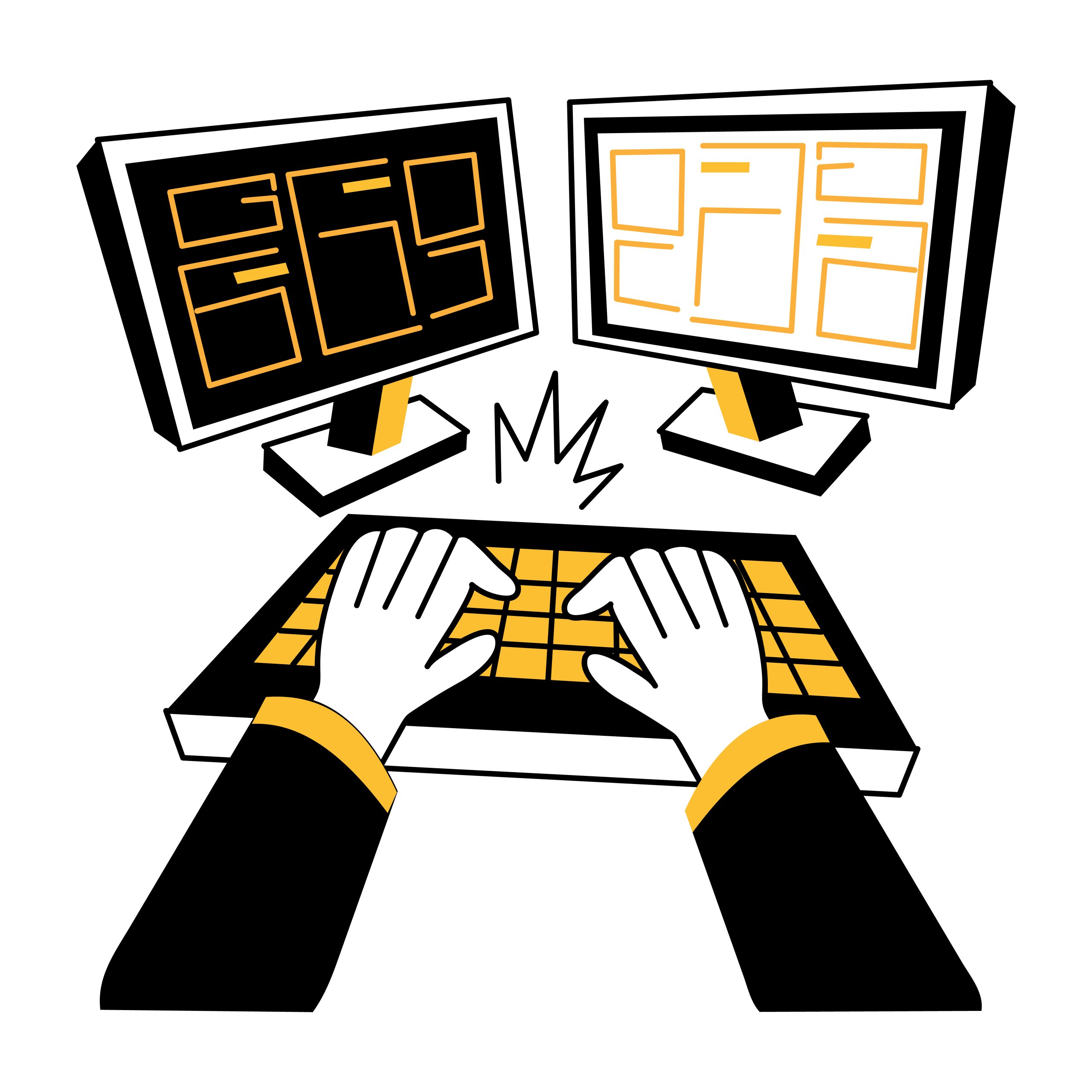
That terminal side matters more on Ubuntu than many beginners expect. The moment you connect to a remote Linux machine, especially a smaller server, you may not have a desktop at all. You have a shell, a file that needs changing, and whatever terminal editor is already there. In those moments, Nano and Vim stop looking like “expert culture” and start looking like infrastructure.
📝 Note: Many Ubuntu VPS environments are headless. You log in to a shell over SSH; you do not get a desktop by default. That is why terminal editing becomes relevant quickly in server work.
GUI editors still deserve equal respect. For daily local work, they are easier to discover, easier to browse, and easier to live in for long sessions. If you are jumping between multiple files, scanning a project tree, comparing changes, or working with a Git-heavy development flow, a good GUI editor removes friction in ways terminal editing often does not.
Remote GUI-like workflows do exist, especially through tools such as VS Code Remote-SSH, but they add more moving parts than plain terminal editing. That is why the healthiest Ubuntu setup for many people is one editor for daily work plus one terminal fallback. Think of that fallback as the spare tire: not the main tool, but the one you are glad exists when something goes sideways.
What Actually Matters When Choosing an Ubuntu Editor

Start with the most basic question: where do you work most often? If nearly all your editing happens on a local Ubuntu desktop, a GUI editor may carry most of the load. If you spend regular time in SSH sessions, terminal comfort matters much more. If your work crosses both worlds, optimize for a pair of tools rather than forcing one editor to cover every situation badly.
Next comes honesty about learning curve and hardware. Some editors are easy in five minutes and stay easy. Others pay off only after real repetition. There is no virtue in choosing a steep tool you will resent using. On an older laptop or a small VM, a lightweight editor can feel dramatically better than a feature-rich one that drags. Smooth responsiveness is a real productivity feature.
Then ask how much tooling you actually need. If your work is mostly notes, configs, shell scripts, and occasional code, you may not need a huge extension marketplace or deep workspace model. If you live in Git, debugging, multi-file refactors, and language tooling, those extras stop being extras. Cross-platform consistency matters too. If you move between Ubuntu, Windows, and macOS, a familiar editor reduces friction.
📝 Note: Remote workflow support deserves a more skeptical look than it usually gets online. There is a big difference between works anywhere you have a shell and works remotely if the server can support a richer stack.
| Shell-based tools | Remote IDE tools |
|---|---|
| Nano, Vim-family tools | VS Code Remote-SSH |
| Needs only a terminal session | Needs SSH, compatibility, and enough remote resources |
| Best on tiny or stripped-down servers | Best when the remote machine can comfortably run the richer stack |
| Fast and reliable even on minimal setups | Microsoft guidance: 1 GB RAM minimum, 2 GB RAM + 2 CPU cores recommended |
Finally, consider licensing and future-proofing, but do not let identity do your choosing for you. Some readers care deeply about open source; others are comfortable with a proprietary tool if the workflow win is real. More important is this: choose for the work you do often, not the person you imagine becoming later. If you may eventually manage an Ubuntu VPS or dedicated server, terminal familiarity is worth building. There is no prize for forcing yourself into the wrong editor culture.