























































































































































Key Features

High-performance RTX 4070 Ti SUPER & NVIDIA GeForce RTX 5080 Ti

Flexible Payments


Multi-core CPUs

Faster training for large language models (LLMs)


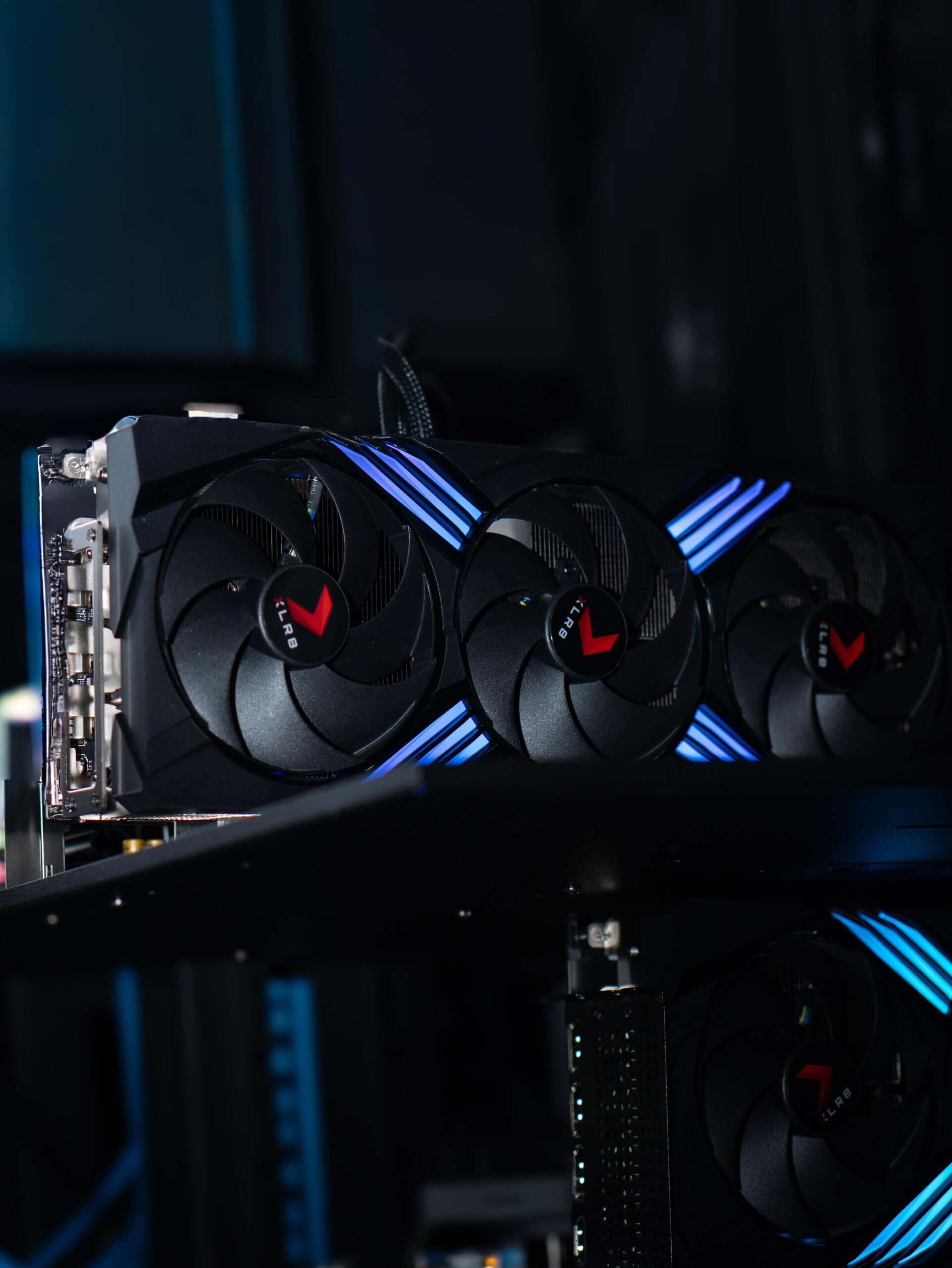
1x NVIDIA GeForce RTX 4070 TI SUPER 
 OS: Ubuntu 22.04 + LLM
300.00€
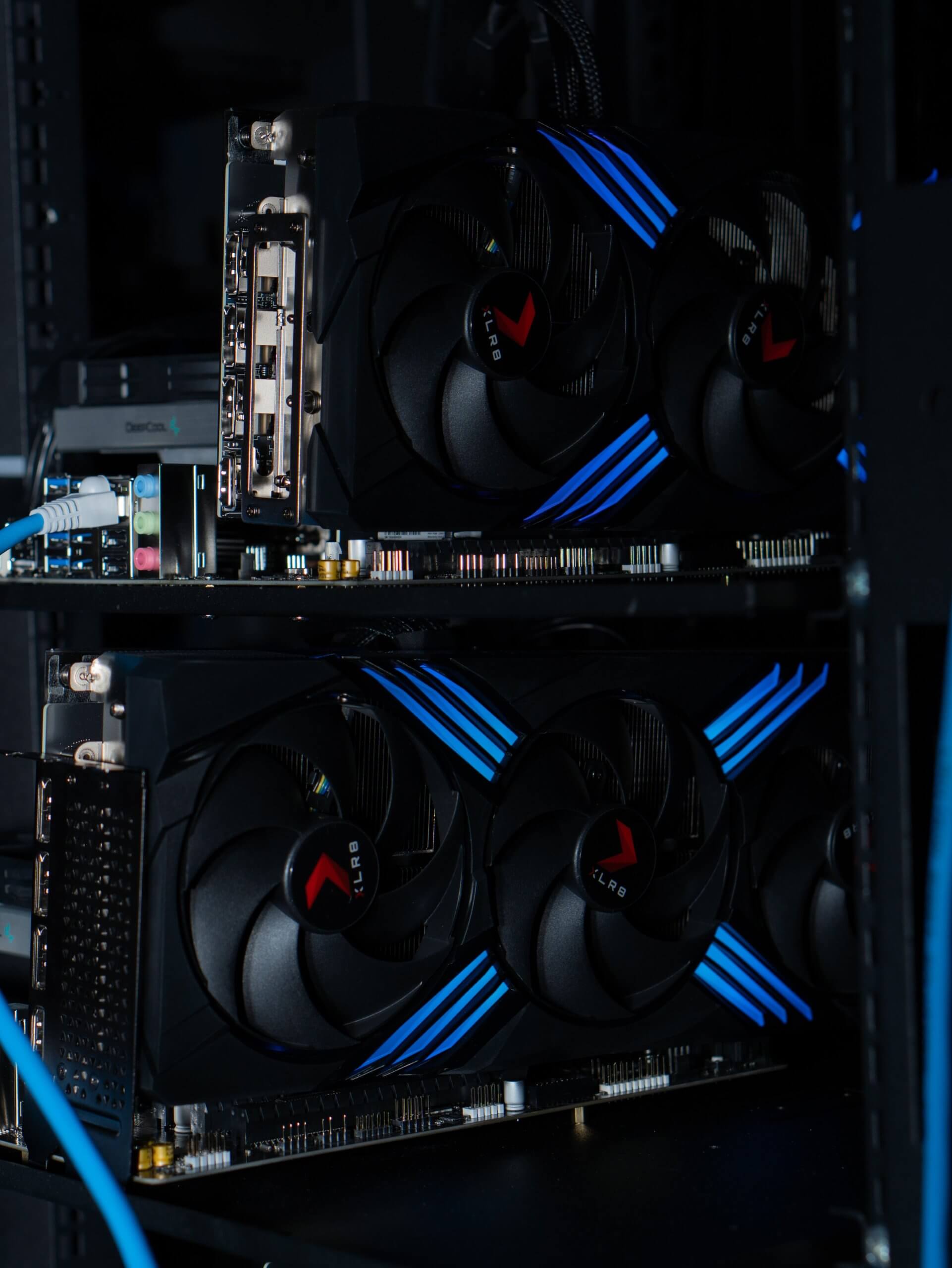
2x NVIDIA GeForce RTX 4070 Ti SUPER OS: Ubuntu 22.04 + LLM
94.5€
2x NVIDIA GeForce RTX 5080 Ti OS: Ubuntu 22.04 + LLM
134.50€
2x NVIDIA GeForce RTX 4070 Ti SUPER OS: Ubuntu 22.04 + LLM
94.5€



Designed for AI and compute-intensive workloads


AI Training
With thousands of processing cores, the GPU powered by dual 4070 Ti and GeForce RTX 5080 Ti matrix operations and calculations in parallel. This significantly accelerates AI training tasks compared to traditional CPUs.


Deep Learning
GPUs efficiently manage the intense computational requirements of deep neural networks and recurrent neural networks, which are essential for developing sophisticated deep learning models, including generative AI.


High-Performance Computing
Superior GPU performance, particularly with the dual 4070 Ti’s 16GB GDDR6X memory and 7,680 CUDA cores, and and GeForce RTX 5080 Ticores, is ideal for compute-intensive workloads, including dynamic programming algorithms, video rendering, and scientific simulations.


Data Analytics
GPUs offer high memory bandwidth and efficient data transfer capabilities, enhancing the processing and manipulation of large datasets for faster analysis. The 4070 Ti’s and and GeForce RTX 5080 Ti 21 Gbps memory speed and advanced architecture reduce data bottlenecks, accelerating workloads.


Choose Your Setup: AI, UI & Remote Access
-
 Oobabooga Text Gen UI
 - PyTorch (CUDA 12.4 + cuDNN)
- SD Webui A1111
- Ubuntu 22.04 VM
Also: At the request, we can install any OS 
Specs
Relative Performance
Memory Bandwidth



Server for Deep Learning: Maximize Your AI Training with AlexHost
The advancement of artificial intelligence heavily depends on the infrastructure that powers training and inference. Whether you're developing transformer-based models, building advanced convolutional neural networks, or working on reinforcement learning projects, choosing the right server for deep learning is a fundamental step toward success.
At AlexHost, we offer enterprise-grade
Bare-metal servers engineered specifically to handle the intensive compute and memory demands of deep learning workloads. From cutting-edge NVIDIA GPU configurations to ultra-fast NVMe storage and high-throughput network access, our infrastructure is designed to eliminate bottlenecks and deliver unmatched performance, stability, and control 
By selecting a deep learning server from AlexHost, you unlock the
full potential of your machine learning workflow:
Our server with GPU for deep
learning options are tailored for


And clients that demand reliable, transparent, and high-performance compute
Whether you need a single-node system with a powerful RTX GPU or a multi-GPU powerhouse loaded with A100s or H100s, AlexHost provides scalable solutions at highly competitive pricing.
GPU Server for Deep Learning: Speed Up Your AI Model Training
A GPU server for deep learning is designed to handle parallel computation tasks far beyond the capability of traditional CPUs. AlexHost offers high-performance GPU servers powered by the latest NVIDIA architectures, capable of managing complex operations such as matrix multiplications, tensor computations, and large-scale model training.
Our data center in Moldova ensures low-latency connectivity across Europe and beyond, while our custom configurations allow clients to select exactly the specs they need — from single-GPU setups to multi-GPU beasts, ready for deep learning at scale.
Why Choose a Server with GPU for Deep Learning?
A server with GPU for deep learning is essential for training models that require large datasets, high-resolution input (such as images or video), or complex architectures like transformers and CNNs. AlexHost servers offer:



Use Cases for Deep Learning Servers at AlexHost
Our infrastructure is designed for real-world AI applications across a wide range of industries:

Image Recognition & Classification:
Medical imaging, industrial defect detection, security systems
Natural Language Processing (NLP):
Chatbots, translation systems, and text summarization
Speech Recognition:
Voice command systems, transcription tools, and audio analytics
Generative AI & LLMs:
Fine-tuning large language models and generative networks (GANs)
Autonomous Systems:
Robotics, drones, and smart transportation solutions